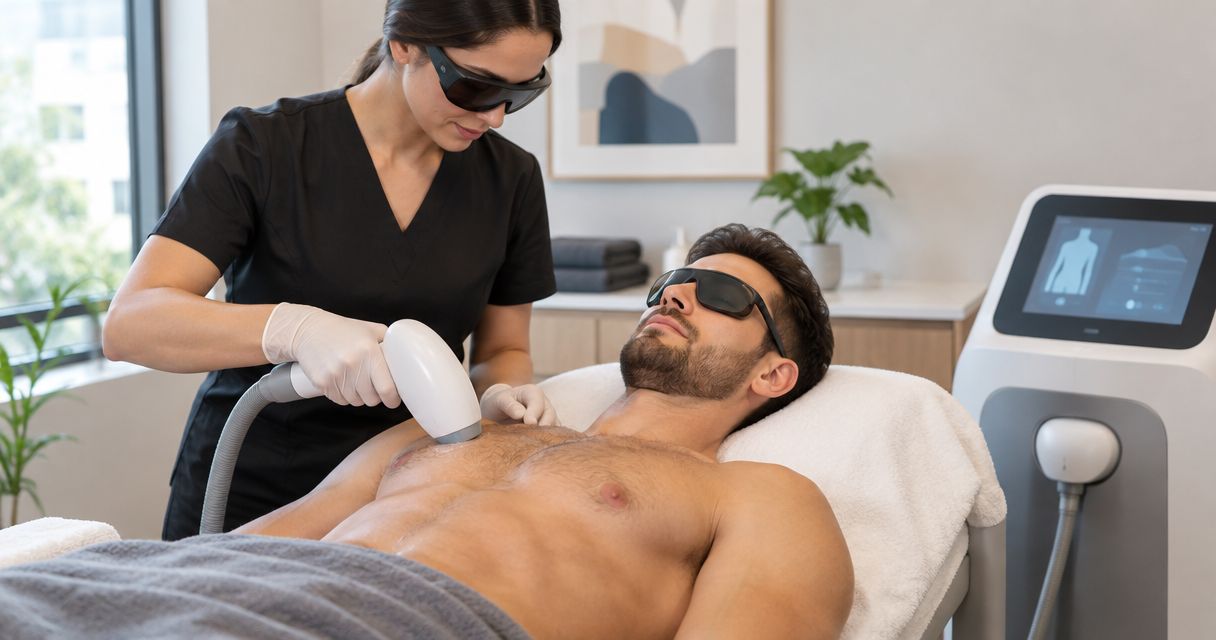

Postpartum laser hair removal is treatment that targets pigment in unwanted hair with the aim of reducing hair growth after childbirth. Start with an individual assessment and a written quote: recovery, breastfeeding, changing hair patterns and the condition of each treatment area matter more than a standard return date.
- For laser hair removal postpartum, choose an assessment before committing to treatment or a package.
- Apex Wellness Centre offers Halifax clients laser hair removal; postpartum suitability requires an individual assessment.
- Breastfeeding, medications, healing skin and recent tanning belong in your consultation discussion.
- Shaving or trimming offers temporary control while you decide whether laser treatment fits your recovery.
Why laser hair removal matters for new moms
After childbirth, unwanted hair removal competes with recovery, feeding, sleep and childcare. A treatment plan needs to fit those realities without turning a cosmetic preference into another deadline.
Hormonal changes can affect hair growth after pregnancy. That makes it useful to distinguish hair you have wanted to address for years from a pattern that appeared during pregnancy or after delivery. A new hair pattern is a reason to ask questions, not a reason to rush into a package.
Apex Wellness Centre is an option for Halifax clients seeking an assessment for laser hair removal postpartum. The clinic offers laser hair removal on Spring Garden Road; whether treatment fits your circumstances belongs in the assessment, not in a general online guide.
For your 2026 consultation, prioritise clear treatment boundaries, an explanation of risks and a written quote. Equipment names alone do not answer whether your skin has healed or whether the proposed area is appropriate.
Plan postpartum treatment around your recovery
Start with your recovery, not a calendar deadline
There is no single postpartum date that establishes suitability for everyone. A routine postpartum appointment also does not automatically clear every cosmetic treatment or every body area.
Tell the assessing practitioner how your recovery is progressing, including complications, ongoing discomfort and any instructions from your maternity care team. A healed-looking surface does not give you enough information to judge deeper discomfort or scar sensitivity yourself.
If you have unresolved symptoms, discuss them with your medical care provider before arranging elective treatment. An appointment date should follow the assessment, not determine its outcome.
- Record your delivery date and any recovery complications.
- Explain any ongoing bleeding, pain, irritation or wound concerns.
- Bring relevant instructions from your maternity care provider.
- Ask whether the proposed area needs a separate examination.
Explain breastfeeding and medication changes
Breastfeeding is a separate assessment topic, not a detail to leave until treatment day. Evidence about cosmetic laser hair removal during breastfeeding is limited, so a general reassurance online is not a substitute for an individual discussion and the clinic's treatment policy.
Disclose prescription medicines, non-prescription products and supplements. Some medicines increase sensitivity to light; others matter because of the condition they treat. Do not stop a prescribed medicine to qualify for a cosmetic appointment.
Treatment near the breast or nipple needs an explicit discussion about location, skin condition and feeding contact. Do not assume that a decision about leg treatment applies to every other area.
- State whether you are breastfeeding or expressing milk.
- Bring an up-to-date medication and supplement list.
- Mention prescription creams used on proposed treatment areas.
- Ask whether breastfeeding changes the clinic's treatment policy.
- Confirm whether any proposed topical product needs separate advice.
Map the exact areas you want treated
Before contacting a clinic, write down the areas that bother you and the boundaries you expect. Bikini terminology is not standard enough to replace a clear description, particularly when scars, sensitivity or healing tissue are nearby.
Start manually: make a short list and mark any location you do not want treated. An assessment at Apex Wellness Centre can then focus on those specific areas rather than a broad package label.
For a 2026 written quote, ask for treatment coverage in plain language. A quote for an area does not establish that every patch of skin within it is suitable for treatment.
- Name each requested area separately.
- Identify scars, stretch marks, irritation and sensitive patches.
- Clarify bikini boundaries before agreeing to treatment.
- Ask which areas would be excluded or deferred.
- Request a quote that matches the agreed boundaries.
Describe your skin colour and recent sun exposure
Assessment-based care for every skin colour means considering each person's skin and hair, not applying the same settings to everyone. Laser hair removal targets pigment, so skin pigmentation, hair colour and recent tanning affect treatment decisions.
Tell the practitioner about your usual skin colour, recent sun exposure and any previous pigment changes after irritation or procedures. Explain whether pregnancy changed pigmentation in the intended treatment area. Those changes deserve assessment rather than an assumption that your previous treatment plan still applies.
Laser treatment can cause burns and changes in pigmentation. Ask how the practitioner evaluates those risks for your skin, and whether a test patch is appropriate before treating a larger area.
- Describe recent sun exposure and any tanning products used.
- Point out darker patches that developed during pregnancy.
- Report previous burns or pigment changes after treatment.
- Ask how your skin and hair affect suitability.
- Discuss whether a test patch is recommended.
Separate established hair growth from new changes
Hair follicles cycle through different growth phases, which is why laser hair removal involves repeated treatments rather than one universal appointment. Postpartum hormonal changes add another reason to avoid guarantees about your final result or schedule.
Write down when the unwanted hair appeared and whether it is changing. If growth is sudden, marked or accompanied by other symptoms, ask your medical care provider whether it needs assessment before you treat it cosmetically.
Plan around an observed hair pattern, not a promised finish date. Your 2026 plan should allow reassessment instead of assuming every appointment will happen on a fixed timetable.
- Distinguish longstanding hair from newly noticed growth.
- Describe previous laser treatment and your response.
- Explain whether hair colour or thickness has changed.
- Ask how progress will be assessed between appointments.
- Avoid treating a session estimate as a guaranteed outcome.
Build a preparation plan you can actually follow
Read the clinic's preparation and aftercare instructions before choosing a treatment date. Shaving, waxing and plucking are not interchangeable: waxing and plucking remove hair from the follicle, which interferes with the target laser treatment relies on.
Ask for instructions specific to your area, skin and treatment plan rather than borrowing a friend's routine. Caring for a newborn can make even simple preparation difficult, so raise practical barriers before booking.
Make a list of 3 tasks: preparation, attendance and aftercare. If any task is unrealistic during your current recovery, postponing is a practical decision rather than a missed opportunity.
- Request written preparation instructions.
- Confirm which hair-removal methods to avoid and when.
- Ask what skin products need to be paused.
- Arrange childcare that allows you to attend without rushing.
- Check how aftercare fits feeding, clothing and daily activities.
Compare the written plan before committing
Start with a simple comparison sheet rather than a package purchase. Record the proposed area, assessment findings, expected appointment pattern and what happens if treatment needs to pause.
For your 2026 clinic comparison, request costs in CAD and ask whether HST is included or excluded. Keep the treatment quote separate from assumptions about how many appointments you will ultimately need.
Before committing, ask 3 questions: what is being treated, why is it suitable now, and what would make the practitioner postpone? Clear answers are more useful than a promise of permanent smoothness.
- Request the exact treatment boundaries in writing.
- Ask for the proposed plan and its limitations.
- Confirm how progress and skin response will be checked.
- Clarify cancellation, postponement and package terms.
- Ask who to contact about an unexpected skin reaction.
If you want to discuss your circumstances, use the booking page to request an assessment. Explain that you are postpartum and want suitability advice before deciding on treatment.
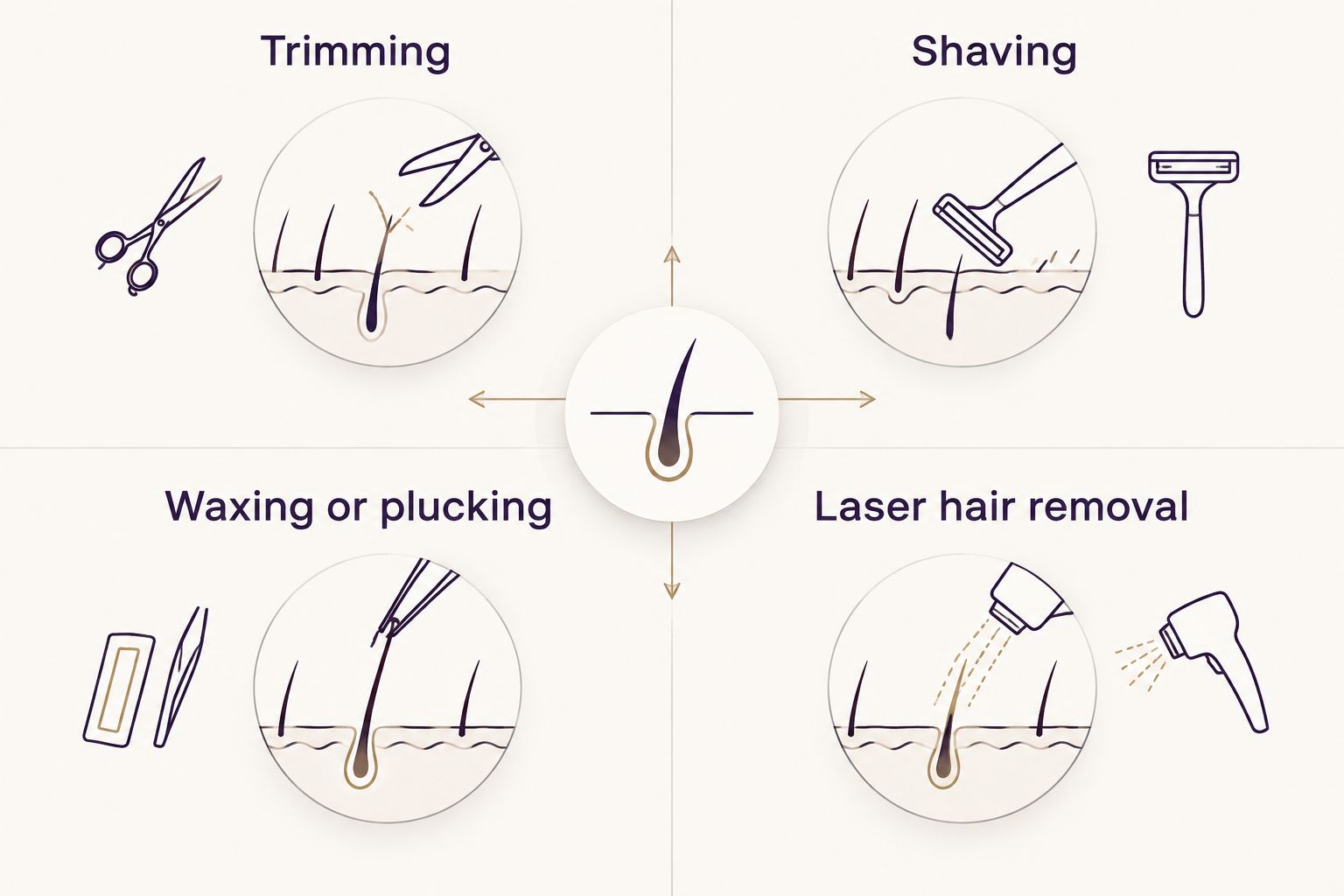
Compare postpartum hair-removal options
The best option depends on whether you want temporary control now or are ready to discuss longer-term reduction. None of these methods replaces assessment of sore, broken, infected or otherwise concerning skin.
| Option | Best for | Main advantage | Key limitation |
|---|---|---|---|
| Trimming | Temporary control without a close shave | Shortens hair without removing it from the follicle | Does not produce a smooth finish; tools can still nick skin |
| Shaving | Temporary smoothness while postponing treatment | Removes visible hair without pulling it from the follicle | Requires repetition and can cause cuts or irritation |
| Waxing or plucking | Temporary removal from the root | Removes the hair rather than cutting it at the surface | Can irritate skin and conflicts with preparation for laser treatment |
| Laser hair removal | Longer-term reduction after suitability assessment | Targets hair follicles rather than only surface hair | Requires repeated treatment; results vary and burns or pigment changes are possible |
Compare 2 areas separately if their condition differs. Healed underarm skin and a sensitive bikini area do not need to share the same decision or appointment date.
Common mistakes new moms make
Treating postpartum clearance as blanket approval
A postpartum check addresses your health and recovery; it is not an assessment of every proposed cosmetic procedure. Ask about laser treatment specifically, including breastfeeding and the exact area you want treated.
Assuming your previous laser settings still apply
Your skin condition, pigmentation, medicines or hair pattern might have changed since your last appointment. Tell the practitioner what changed rather than asking to restart the old plan unchanged.
Booking a bikini area without discussing healing
A package name does not describe scar position, discomfort or the boundaries of healing tissue. Explain the location of any concern and ask what needs to be excluded or postponed.
Buying around an event deadline
A holiday or return-to-work date does not establish how your hair will respond. Avoid a plan that depends on guaranteed clearance by a particular occasion, especially while your hair pattern is changing.
FAQ
When can I start laser hair removal postpartum?
Start with an individual assessment rather than a universal waiting period. Recovery, treatment area, breastfeeding, medicines and skin condition all belong in the decision about timing.
Can I get laser hair removal while breastfeeding?
Breastfeeding needs a specific suitability discussion because evidence about cosmetic laser hair removal during breastfeeding is limited. Tell the clinic before booking and ask about its policy, the proposed area and any topical products.
Is laser hair removal guaranteed to work after pregnancy?
No, laser hair removal does not guarantee a particular result after pregnancy. Hair colour, growth patterns, skin characteristics and hormonal changes affect the treatment plan and response.
Can I have laser treatment near a C-section scar?
A C-section scar and surrounding skin need assessment before nearby laser treatment. Report pain, sensitivity or healing concerns, and do not assume the scar is included in a bikini-area treatment.
Should I shave or wax before postpartum laser treatment?
Follow the treating clinic's preparation instructions, and do not substitute waxing or plucking for shaving. Waxing and plucking remove hair from the follicle and interfere with the target laser treatment relies on.
Does darker skin rule out postpartum laser hair removal?
Darker skin does not automatically rule out laser hair removal, but suitable equipment, settings and individual assessment matter. Discuss recent tanning, pregnancy-related pigmentation and any history of pigment changes.
What should I ask a Halifax clinic before booking?
Ask who will assess you, whether the exact treatment area is suitable now, and what risks apply to your skin. Request a written quote in CAD, confirmation of HST treatment and clear preparation instructions.
One last thing
You do not have to make one decision for your whole body. A consultation can end with different plans for different areas, including postponing an area that remains uncomfortable or has changing pigmentation.
For 2026, make your next step an assessment, not a commitment to finish treatment by a deadline. A clear reason to wait is as useful as a clear reason to proceed.