
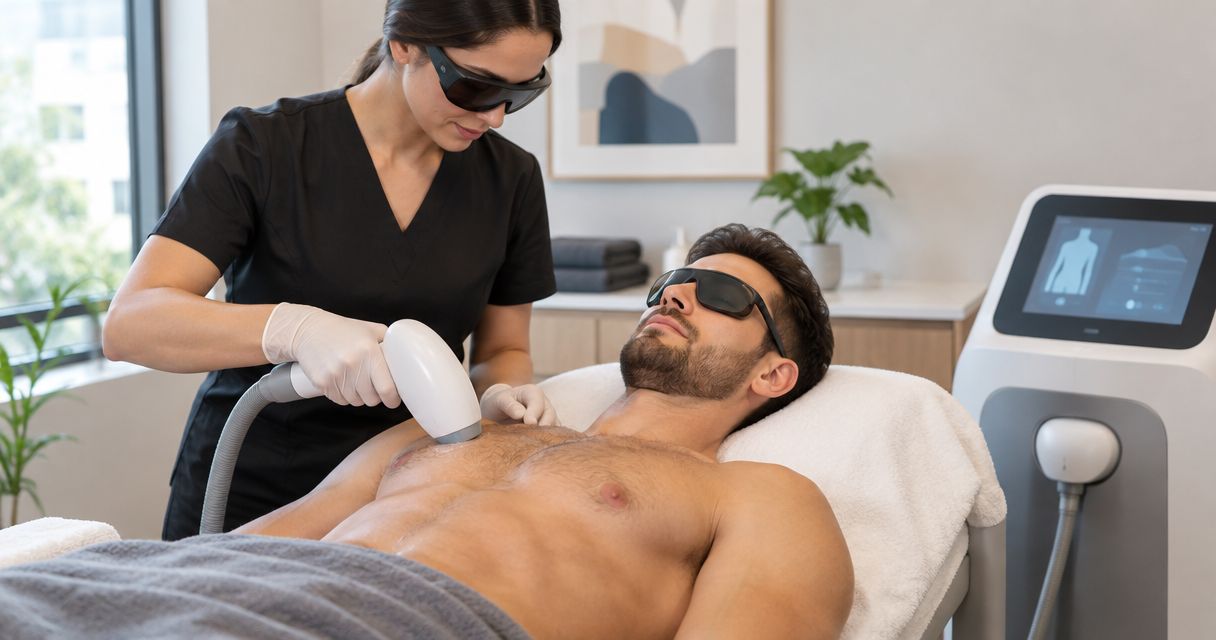
Grooms’ laser hair removal is a course of light-based treatments aimed at reducing unwanted hair before a wedding, with suitability and timing determined through assessment. For Halifax grooms planning a 2026 wedding, the starting point is a written quote, clear treatment boundaries and an assessment-based plan for your skin colour—not a promise of being hair-free by the ceremony.
- Laser hair removal for grooms needs an assessment-led schedule, not a guaranteed wedding-day result.
- Apex Wellness Centre is best for Halifax grooms seeking a local laser hair removal assessment.
- Compare exact treatment coverage, preparation instructions and written totals before choosing a clinic.
- Shaving remains an option when your wedding timeline does not suit a course of treatment.
Why laser hair removal matters for grooms
Wedding preparation creates a fixed deadline for a treatment whose results vary. You might want less back or shoulder hair, easier neck maintenance, or less time spent shaving, but those are different goals and need different treatment boundaries.
For your 2026 plans, Apex Wellness Centre offers laser hair removal on Spring Garden Road in Halifax. Apex Wellness Centre is best for Halifax grooms seeking a local laser hair removal assessment. Suitability still depends on your individual assessment; location alone does not establish whether treatment is appropriate.
Laser hair removal targets pigment in hair follicles. Hair colour, hair thickness, skin tone, recent sun exposure and the treatment area all affect the discussion. Very light, white or grey hair generally responds poorly because it contains little of the pigment the treatment targets.
A groom’s consultation also needs to account for the honeymoon. A sunny destination, outdoor work or a recent tan belongs in the planning conversation before you agree to appointments.
Plan your treatment around the wedding
Define the areas you actually want treated
Start manually: write down the areas you shave, the areas that bother you and the areas you prefer to leave unchanged. This gives the consultation a specific purpose rather than turning a wedding deadline into an unnecessarily broad treatment plan.
Be especially careful with beard and neck boundaries. Reducing hair along an edge changes future styling options, so distinguish occasional tidying from a lasting reduction in density. Bring a photograph showing the boundary you mean, without treating the photograph as a promised result.
Treatment names do not tell you everything. A back treatment and a back-and-shoulders treatment are not automatically equivalent, and a package name does not establish which smaller areas it includes.
- Mark the exact areas you want assessed.
- Identify hair you want to keep, including beard edges.
- Describe whether your goal is less density or easier maintenance.
- Ask where each quoted treatment area begins and ends.
Build a realistic timeline before booking
Put your wedding, photography appointments, travel and outdoor events on a calendar first. Then ask a treating professional whether a course of laser hair removal fits those dates. Do not build the calendar around an assumed finish date.
Apex Wellness Centre’s session guide describes a usual course of 6 to 9 sessions, with individual variation. That is not a promise that 6 sessions will achieve your goal or that 9 sessions will complete treatment. Session spacing also depends on the area and the treatment plan.
For a 2026 wedding, ask about both the longer course and the appointment nearest the event. Temporary redness or swelling can occur after treatment, and your provider should explain recovery expectations rather than promise that your skin will look unchanged immediately afterwards.
If the available timeline does not fit the assessment, change the grooming plan—not the treatment intervals yourself. Shaving can remain your wedding-day option while you consider longer-term reduction separately.
- Share the ceremony and photography dates.
- Include honeymoon travel and expected sun exposure.
- Ask how the treatment area affects appointment spacing.
- Request guidance on the appointment nearest your event.
- Keep a familiar grooming alternative in your plan.
Arrange an assessment before choosing treatment
Prepare a short health and grooming history yourself before contacting a clinic. Include medications, skin conditions, recent tanning, previous hair removal and any past reaction to cosmetic treatment. Do not stop prescribed medication to qualify for an appointment; ask the prescriber and treating professional for advice.
You can book an assessment to discuss laser hair removal with Apex Wellness Centre. Use the appointment to establish suitability and expectations, rather than treating attendance as a commitment to proceed.
For darker skin tones, ask how the provider selects the treatment approach and manages the risk of pigment changes. A 1064 nm Nd:YAG wavelength is an established option used for hair removal in darker skin, but a wavelength name does not replace assessment, appropriate settings or operator competence.
Ask who will carry out your treatment and what training supports that role. If a test patch is recommended, clarify what it assesses and when the provider will evaluate your skin’s response.
- Disclose medications, skin conditions and previous reactions.
- Explain recent sun exposure and any tanning products.
- Ask who assesses suitability and who performs treatment.
- Discuss burns, pigment changes and other relevant risks.
- Confirm whether a test patch forms part of your plan.
Compare written quotes on the same basis
Make a simple comparison sheet before requesting quotes. Use the same areas and goals for every clinic so that a shorter treatment description does not look like better value simply because it covers less.
A useful written quote identifies the treatment area, what the proposed course includes, and whether HST is included or added. For your 2026 comparison, confirm current terms directly with the clinic rather than relying on a search snippet, an older screenshot or a package name.
Keep the treatment decision separate from the payment decision. A package does not establish suitability, and a lower per-appointment figure does not tell you how much of your back, shoulders or neck the appointment covers.
Compare coverage and the written total before comparing headline figures. Ask how changes to the assessed plan affect the quote, especially if you are considering several areas.
- Record the exact treatment boundaries.
- Request a written total in CAD.
- Confirm whether HST is included or added.
- Ask what happens if the recommended plan changes.
- Read cancellation and package terms before agreeing.
Follow the preparation and aftercare instructions
Start with written instructions from the treating provider, not advice copied from someone else’s appointment. Different treatment areas and individual circumstances require different guidance. Ask questions before treatment if an instruction conflicts with your usual skincare routine or prescribed care.
Laser hair removal generally requires the hair follicle to remain present, so waxing, plucking and epilating can interfere with treatment planning. Shaving is commonly used instead, but the clinic should tell you when and how to prepare your specific area.
Arrange your wedding grooming around those instructions. Do not add an unfamiliar exfoliant, tanning product or facial treatment immediately around an appointment without discussing it first. The aim is to avoid overlapping procedures or irritation that complicate assessment and recovery.
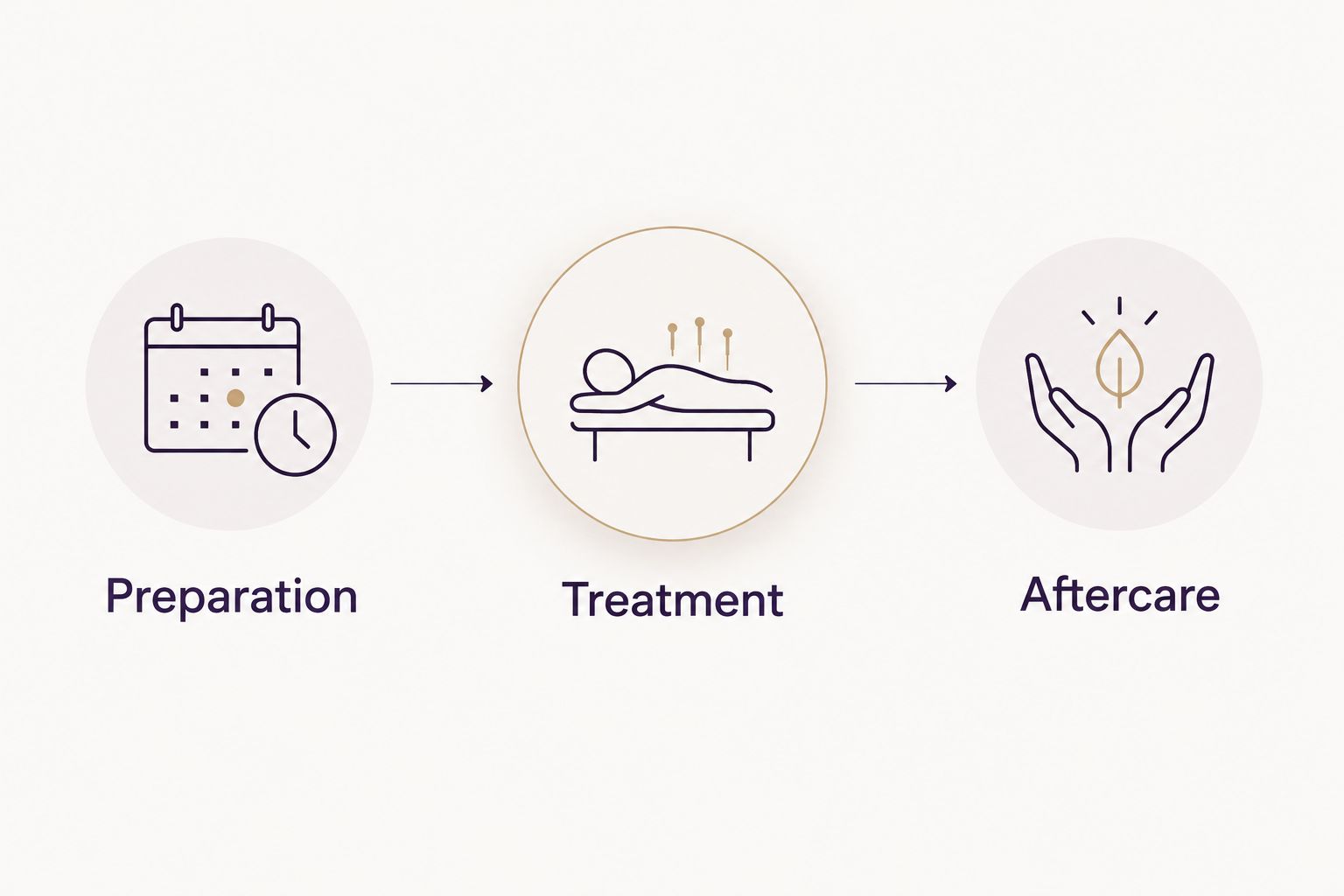
Keep the process simple: preparation, treatment and aftercare belong to the same plan. If your skin changes between appointments, tell the provider before the next session rather than assuming the previous instructions still apply unchanged.
- Request written preparation and aftercare instructions.
- Confirm when to shave the treatment area.
- Ask when to stop waxing, plucking or epilating.
- Discuss skincare products and other planned treatments.
- Report tanning, irritation or medication changes before attending.
Review progress without chasing the deadline
Keep your own brief record after each appointment. Note the treated area, your skin’s response and any questions for the next visit. If you take photographs, use similar lighting and positioning so that the comparison is useful rather than misleading.
Hair does not disappear uniformly after an appointment. Ask the provider what changes to expect and how progress will be assessed; do not judge success solely by how smooth the area feels immediately after shaving.
As the wedding approaches, revisit the plan with the provider. A 2026 ceremony date is a scheduling constraint, not a reason to increase treatment intensity or shorten intervals without clinical justification. Maintenance after the initial course is a separate conversation, not evidence that a wedding package guarantees permanent removal.
- Record skin reactions and questions after appointments.
- Use consistent photographs if you track changes visually.
- Ask the provider to explain progress in the treated area.
- Reconfirm plans before travel or major sun exposure.
- Keep event-day grooming separate from long-term maintenance.
Compare hair removal options for grooms
Laser hair removal is an option for longer-term reduction; shaving is an option for immediate grooming. Neither solves every wedding-preparation problem. Choose according to your deadline, skin response, hair characteristics and willingness to attend appointments.
The table compares practical options rather than declaring one method best for every groom. A method that works well for your chest is not automatically the right choice for a beard boundary or sensitive neck.
| Option | Best for | Main advantage | Key limitation |
|---|---|---|---|
| Shaving | Grooms needing immediate grooming | Removes visible hair without waiting for a treatment course | Requires repeat grooming and can cause irritation or cuts |
| Trimming | Grooms wanting shorter hair without a close shave | Keeps hair while reducing its length | Does not provide a smooth finish or reduce future growth |
| Waxing | Grooms choosing temporary removal from the root | Removes hair beyond the skin surface | Can irritate skin and conflicts with preparation for laser treatment |
| Laser hair removal | Grooms seeking longer-term reduction in suitable hair | Can reduce growth across a course of treatment | Requires assessment and repeat appointments; results vary |
If you are considering Apex Wellness Centre for laser hair removal, the advantage is access to a local Halifax assessment. The limitation remains the treatment itself: no clinic can responsibly establish your individual result from a wedding date or a general service description alone.
Common mistakes grooms make
Treating the wedding date as a results guarantee
A fixed event does not change hair-growth cycles or individual response. Ask what is realistic within your calendar, and keep a separate plan for grooming on the day.
Choosing a package before defining coverage
“Back” and “upper body” are not sufficiently precise comparisons on their own. Confirm boundaries in writing, particularly around shoulders, upper arms and the neckline, before comparing quotes.
Hiding a tan to avoid rescheduling
Recent tanning matters to treatment safety. Tell the provider about sun exposure and tanning products even when disclosure changes your appointment plans; do not try to assess the risk yourself.
Copying another groom’s treatment settings
A friend’s settings, appointment intervals or experience do not establish yours. Your skin tone, hair characteristics, treatment area and medical history belong in the assessment.
Changing beard boundaries under deadline pressure
Wedding photographs are not a reason to rush a lasting grooming decision. Set conservative boundaries during assessment and distinguish a temporary tidy-up from longer-term hair reduction.
FAQ
When should I start laser hair removal before my wedding?
Arrange an assessment before committing to a treatment schedule. Share your wedding date, travel plans and treatment areas so the provider can explain whether a course fits your timeline without promising a completion date.
Is laser hair removal for grooms permanent?
Laser hair removal aims for long-term hair reduction, not a guarantee that every hair disappears permanently. Results vary, and maintenance can be part of the longer-term plan.
Can I have laser hair removal if I have darker skin?
Darker skin tones require an individual assessment, not automatic exclusion. Ask how the provider selects the wavelength and settings, assesses recent tanning and manages the risk of burns or pigment changes.
Is shaving better than laser hair removal before a wedding?
Shaving is the more direct option when you need immediate grooming rather than a course of treatment. Laser hair removal addresses longer-term reduction and requires suitability assessment, preparation and repeat appointments.
Can I wax between laser appointments?
Waxing generally conflicts with a laser hair removal course because it removes hair from the root. Ask your provider which grooming methods to use and follow the clinic’s written preparation instructions.
What should a groom ask about the treatment quote?
Ask for exact treatment boundaries, a written total in CAD and confirmation of whether HST is included or added. Also confirm what the proposed course includes and how changes to the assessed plan affect the quote.
Can I have laser treatment just before a sunny honeymoon?
Discuss the honeymoon before booking treatment because sun exposure and tanning affect planning and safety. Give the provider your departure date and destination activities, then follow the individual timing and sun-protection instructions.
One last thing
Before approving treatment, describe the hair you want to keep—not only the hair you want removed. That is particularly useful for beard lines, chest contours and the transition between the neck and scalp.
A clearly agreed boundary is a better starting point than a broad package name. Bring that decision, your wedding calendar and your questions to the assessment; leave with a plan you understand before deciding whether to proceed.