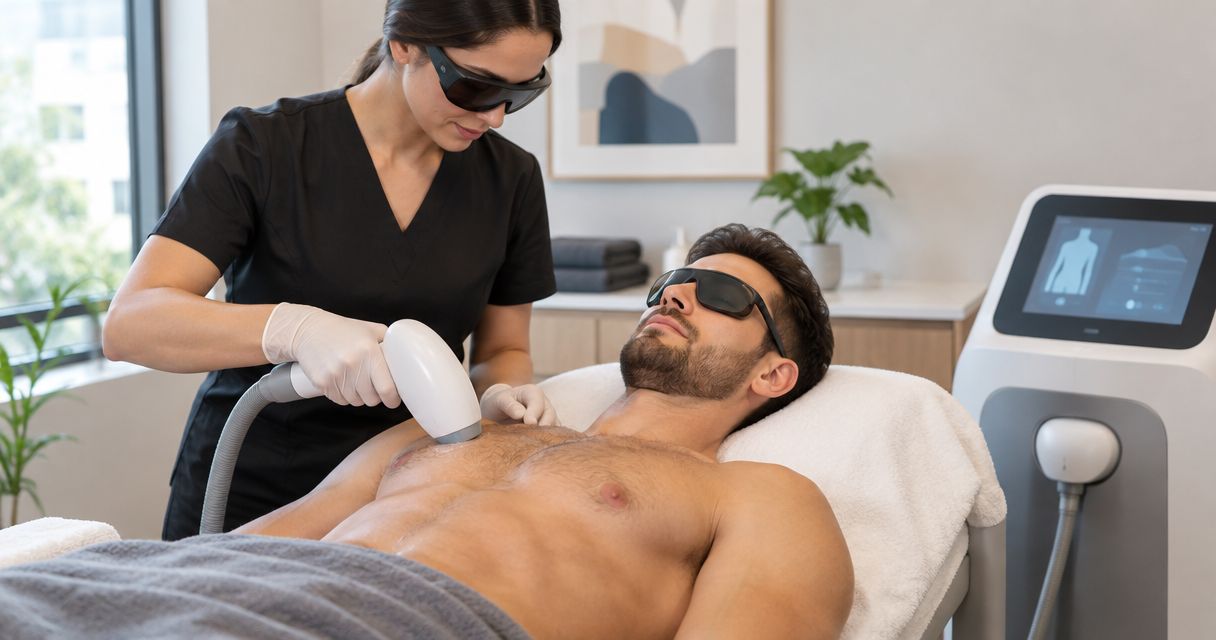

Laser hair removal for brides is a course of treatments aimed at reducing unwanted hair before wedding events, with suitability and timing determined through an individual assessment. For your 2026 Halifax wedding, start with clear treatment coverage and a written quote rather than a promise of hair-free skin by a fixed date.
- Laser hair removal for brides starts with assessment, realistic timing and a written treatment quote.
- Apexwellnesscentre suits Halifax brides seeking a local laser hair removal consultation.
- A course often involves 6 to 9 sessions; individual needs and results vary.
- Keep tanning, skin recovery and honeymoon sun exposure in your wedding preparation plan.
Why laser hair removal matters for brides
Wedding preparation puts an unusual deadline on a treatment that depends on hair growth cycles and your skin’s response. Your ceremony, fittings, photographs and honeymoon can create competing priorities, so the right plan starts with your calendar—not a package size.
Apexwellnesscentre is best suited to Halifax brides seeking a local laser hair removal consultation. The clinic offers laser hair removal on Spring Garden Road; your assessment should establish whether treatment fits your skin, hair and wedding plans.
Laser treatment targets pigment in hair follicles. Because hairs are not all in the same growth stage, a course involves repeat appointments rather than a single treatment. It is a reduction treatment, not a guarantee that every hair will disappear permanently.
For a 2026 wedding, your useful planning questions are practical: which areas matter, what preparation is required, and what happens if your skin needs more recovery time? You also need a realistic alternative if treatment is unsuitable or your wedding is too close.
Bridal preparation does not require laser treatment. Choosing familiar shaving, treating fewer areas or postponing treatment until after the wedding are valid decisions.
How to plan bridal laser hair removal
1. Map your wedding events before choosing appointments
Start with a calendar you can prepare yourself. Include the ceremony, fittings, engagement photographs, pre-wedding events, travel and honeymoon, then mark any periods when you expect substantial sun exposure.
Your wedding date is not the only deadline. An appointment that fits before the ceremony might conflict with photographs or a beach trip, and treatment spacing should not be compressed simply to fit more visits into your schedule.
Bring the calendar to your assessment and ask the practitioner to explain where treatment, preparation and recovery belong. If a proposed schedule depends on your skin responding perfectly every time, ask for a less restrictive plan.
Use these calendar notes:
- Record your ceremony and photography dates.
- Mark fittings that expose the areas you want treated.
- Include travel and expected outdoor activities.
- Identify appointments you cannot move.
- Ask what happens if a session must be postponed.
2. Choose the areas that matter to you
Review your clothing and grooming preferences before selecting treatment areas. Underarms, legs, facial hair and bikini areas involve different personal priorities; you do not need to treat all of them because you are getting married.
Write down the exact boundaries you expect. A treatment name alone does not tell you whether adjacent areas are included, and coverage should be clear before you agree to a course.
For intimate areas, ask how positioning, draping and consent are handled. You should understand the appointment and feel comfortable declining an area or asking the practitioner to stop. A larger treatment plan is not automatically a better bridal plan.
Prepare a short coverage list:
- Name each area you want assessed.
- Describe boundaries rather than relying on package labels.
- Separate essential areas from optional ones.
- Ask whether adjacent areas are included.
- Discuss comfort and privacy requirements before treatment.
3. Arrange an assessment before committing to treatment
Prepare your questions and health information yourself, then use a consultation to resolve suitability rather than trying to diagnose it from photographs online. Skin colour alone does not establish whether a particular treatment plan is appropriate.
Apexwellnesscentre offers laser hair removal in Halifax. Its booking page provides a next step when you are ready to arrange an appointment; confirm that the appointment you select is appropriate for an initial assessment.
Ask who will assess and treat you, what training they have, and how they manage complications. A consultation helps clarify individual risks, but it does not remove them or guarantee results. Do not commit solely because a clinic says it can fit appointments before your wedding.
Bring information about:
- Your natural skin colour and recent tanning.
- Hair colour, texture and treatment areas.
- Medicines, supplements and relevant health conditions.
- Previous laser treatment and any skin reactions.
- Your wedding, travel and sun-exposure calendar.
4. Discuss skin colour, hair colour and treatment risks
Make a written question list before your assessment. Laser hair removal depends on the relationship between hair pigment, skin pigment and the equipment and settings used; a device name by itself is not a suitability assessment.
For darker skin, ask whether a 1064 nm Nd:YAG laser is appropriate and how the practitioner selects settings. This wavelength is used for hair removal on darker skin, but it does not make treatment risk-free. White, grey and very light hair generally respond poorly because laser treatment relies on pigment.
Possible adverse effects include burns, blistering and changes in skin pigmentation, alongside temporary redness or swelling. Discuss these risks before treatment, especially when a visible reaction would affect wedding photographs or travel.
Ask the practitioner to explain:
- How your skin and hair affect suitability.
- How recent sun exposure changes the plan.
- Whether a test patch is appropriate.
- Which reactions are expected and which need advice.
- How to contact the clinic about a concerning reaction.
5. Set realistic expectations for sessions and results
Write down your goal in plain language: less frequent shaving, reduced underarm hair or easier grooming while travelling. A specific personal goal is more useful than expecting completely hair-free skin by your ceremony.
Apexwellnesscentre’s session guidance describes a usual course of 6 to 9 sessions, with individual variation. That range is not a bridal deadline guarantee, and completing a course does not establish that you will never need further treatment.
For a 2026 ceremony, ask what is reasonable within the time available—not how many appointments can be squeezed in. Hair growth cycles, the area treated and your response affect scheduling. If the proposed course extends beyond your wedding, decide whether starting now still serves your goal.
Clarify these expectations:
- Your main reason for considering treatment.
- The proposed interval between appointments.
- How progress will be assessed.
- What would trigger a change or pause.
- Whether later maintenance could be needed.
6. Request a written quote with exact coverage
Create a simple comparison sheet before discussing treatment plans. Put coverage, proposed sessions, tax treatment and conditions beside each other so you compare equivalent services rather than headline figures.
Ask Apexwellnesscentre for a current written quote after assessment. The quote should identify the areas included, whether HST is excluded or included, and any conditions attached to a course or package. Do not assume that a familiar treatment label means identical coverage at every Halifax clinic.
For your 2026 wedding budget, keep the treatment decision separate from pressure to purchase more areas. A written quote supports an informed choice, but it does not establish suitability; the clinical assessment and financial explanation must both make sense to you.
Check the written details:
- Exact treatment areas and boundaries.
- Number of appointments included, if applicable.
- Whether HST is included or excluded.
- Cancellation, expiry and refund terms.
- What happens if treatment becomes unsuitable.
7. Keep preparation and recovery in the calendar
Read the clinic’s instructions before booking around important events. Ask for clarification rather than substituting advice from a bridal forum, particularly about tanning, hair removal between sessions and products used on the treatment area.
Waxing and plucking remove hair from the follicle and can interfere with a laser treatment plan. Shaving is commonly used between sessions, but follow the practitioner’s instructions about when and how to prepare your skin.
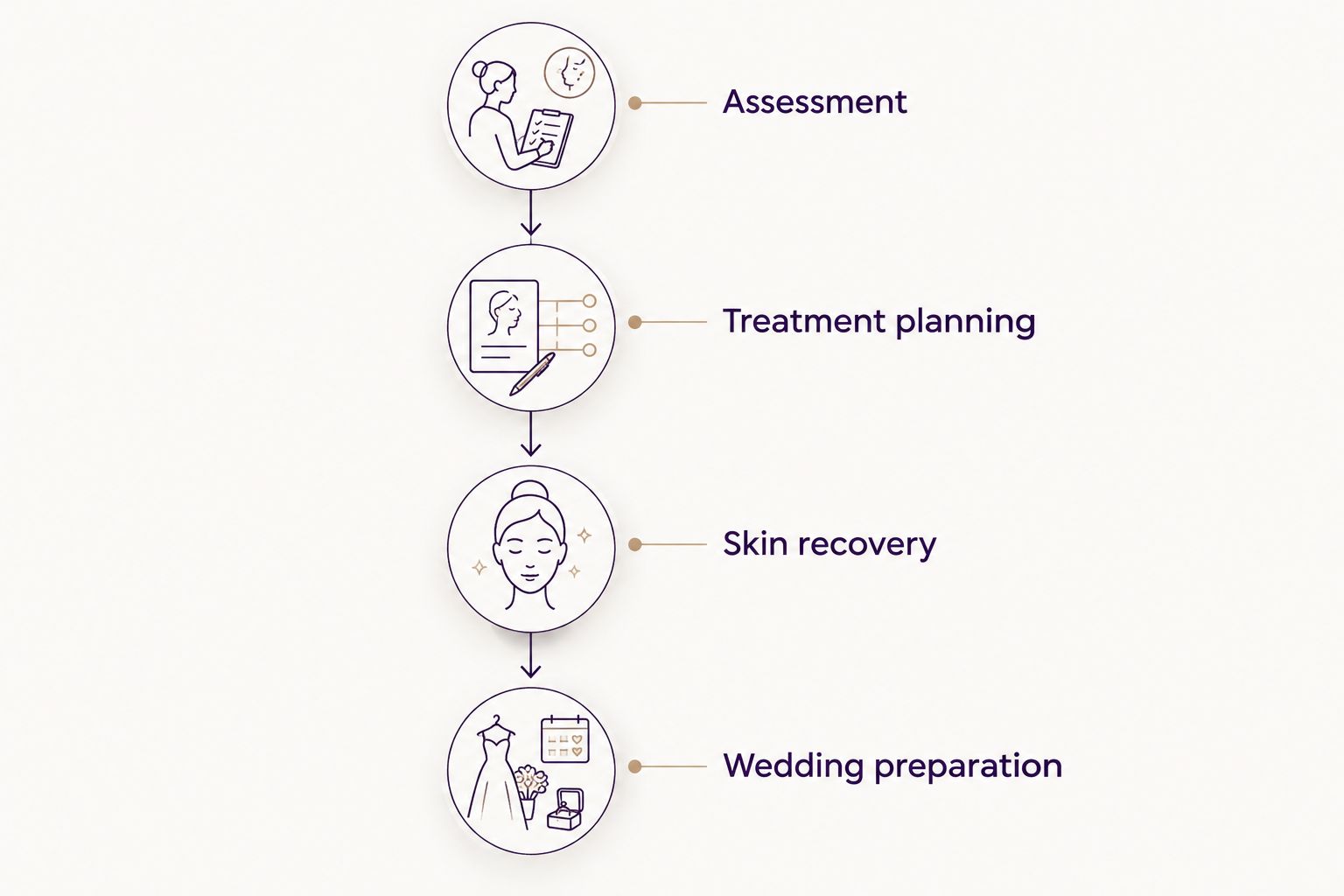
Build your calendar around four stages: Assessment, Treatment planning, Skin recovery and Wedding preparation. Each stage needs room for individual decisions; none should be skipped to meet a photography deadline. Avoid adding an unfamiliar facial or other skin procedure close to the wedding without discussing how it fits your plan.
Keep these instructions accessible:
- Follow the clinic’s preparation guidance.
- Disclose new medicines or changes in health.
- Report tanning or sunburn before attending.
- Follow aftercare and sun-protection advice.
- Ask before combining treatments on the same area.
Compare hair-removal options for your wedding
Choose the method that fits your skin and timeline, not the method with the strongest promise. Laser treatment, shaving and waxing have different trade-offs, and leaving an area untreated remains an option.
The table compares practical uses rather than ranking one method as right for every bride. If your wedding is close, a familiar routine avoids introducing an unfamiliar treatment response, although familiar methods can still cause irritation.
| Option | Best for | Main advantage | Key limitation |
|---|---|---|---|
| Laser hair removal | Brides seeking longer-term hair reduction with time for assessment and repeat visits | Targets hair growth rather than cutting hair at the surface | Requires suitable hair and skin assessment; results vary and adverse reactions are possible |
| Shaving | Brides wanting a familiar method without a treatment course | Removes visible hair at the surface | Regrowth continues; cuts and irritation are possible |
| Waxing | Brides who already tolerate waxing and want temporary removal from the root | Removes hair rather than cutting it | Can irritate skin and conflicts with preparation for laser treatment |
| No hair removal | Brides who prefer to leave an area untreated | Avoids hair-removal-related irritation in that area | Does not change visible hair |
For your 2026 wedding, familiarity is useful but not a safety guarantee. Tell your practitioner about previous reactions even if they happened with a different hair-removal method.
Common mistakes brides make
Treating the wedding date as a clinical deadline
Your skin does not follow a wedding checklist. Asking for shorter intervals or additional treatment to catch up can conflict with the appropriate plan. Accept a course that continues after the wedding, or choose another approach for the event itself.
Booking around package names instead of coverage
A broad label can leave you uncertain about the areas you actually want treated. Ask for boundaries in writing before comparing quotes, particularly where bikini, intimate or adjacent areas are concerned. Resolve any mismatch before committing.
Forgetting the honeymoon when discussing sun exposure
A consultation that covers only the ceremony date leaves out part of your schedule. Include outdoor celebrations and travel when discussing tanning, sun protection and treatment timing. Report changes in those plans before your next appointment.
Trying several unfamiliar treatments together
Adding laser treatment, waxing and a new facial to the same pre-wedding period makes preparation more complicated. Share your full treatment calendar with the practitioner and ask which procedures should be separated or postponed. Do not assume different services are automatically compatible.
Expecting complete removal from a partial course
Starting treatment before the wedding does not establish how much reduction you will have by the ceremony. Keep a suitable grooming alternative in your plan and avoid treating promotional photographs as a prediction of your own response.
FAQ
When should I start laser hair removal before my wedding?
Arrange an assessment early enough to discuss a course without compressing the recommended intervals. Your treatment areas, skin, hair and wedding calendar determine whether starting before the ceremony is practical.
How many laser sessions do brides need?
The number depends on the individual, not on being a bride. Apexwellnesscentre’s session guidance describes a usual course of 6 to 9 sessions, but your assessment and response determine your plan.
Can I have laser hair removal just before my wedding?
Do not assume treatment immediately before your wedding is appropriate. Ask your practitioner how to allow for your skin’s response and any recovery needs, and keep an alternative grooming plan.
Is laser hair removal suitable for darker skin?
Laser hair removal can be suitable for darker skin when the treatment approach is appropriate. Ask about the practitioner’s assessment, equipment, settings and experience; suitability does not mean there is no risk of burns or pigmentation changes.
Can I wax between bridal laser appointments?
Waxing can interfere with laser treatment because it removes hair from the follicle. Follow your practitioner’s instructions about hair removal between appointments and disclose any waxing before attending.
What should a bridal laser treatment quote include?
A written quote should identify treatment coverage, included appointments where applicable, and whether HST is included or excluded. Ask for current CAD amounts and the cancellation, expiry and refund terms before agreeing.
Can I combine laser hair removal with a facial before my wedding?
Ask the treating practitioners before combining laser hair removal and a facial, especially on the same area. The facial type, skin response and timing matter, so provide details rather than relying on a general bridal package description.
Will laser hair removal leave me completely hair-free for my honeymoon?
Laser hair removal does not guarantee completely hair-free skin for your honeymoon. Plan around individual results, any remaining hair and the sun-exposure advice provided for your treatment.
One last thing
Your alternative grooming plan belongs in the consultation, not at the end of a disappointing appointment. Ask what you should do if a session is postponed, your skin reacts or you decide not to continue.
That conversation gives you a useful measure of the plan: can you still prepare comfortably for your wedding if treatment changes? For a 2026 celebration, a flexible schedule and clear instructions are more useful than a fixed promise. You can choose fewer areas, continue after the honeymoon or decide that laser treatment is not right for you.